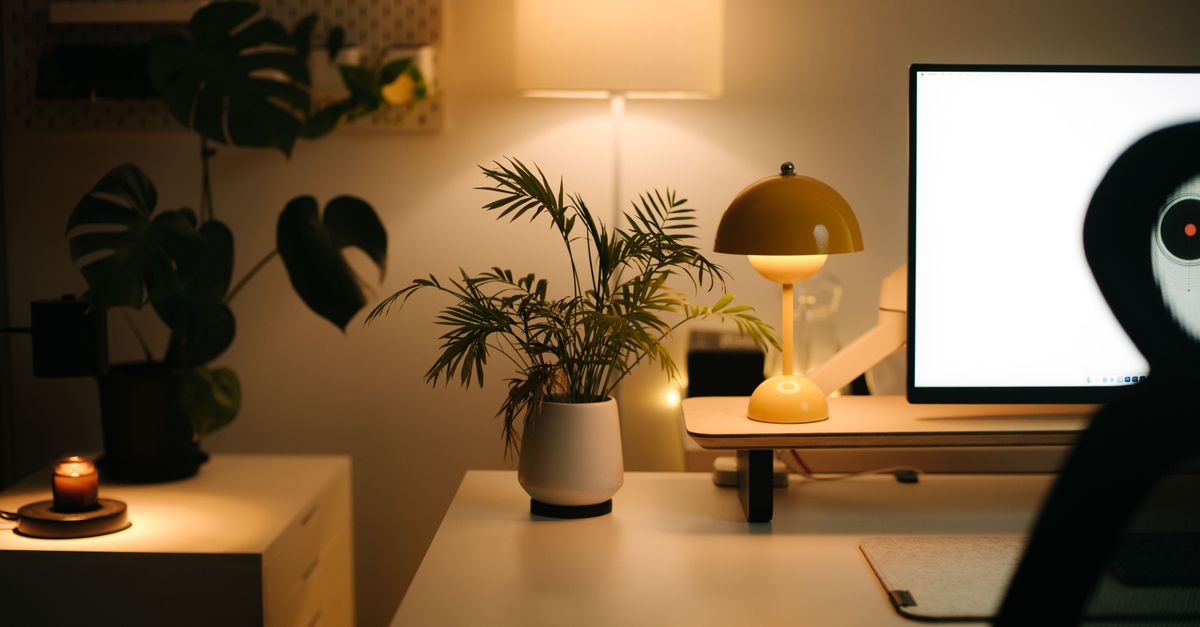
Why Your Home Office Lighting is Sabotaging Your Productivity (And How I Finally Fixed Mine)
Are you staring at your screen right now, feeling that familiar drag around mid-afternoon? Is your head aching slightly, or your eyes feeling gritty? You might blame your workload, your coffee intake, or even a poor night’s sleep. But in my experience, one of the most insidious, yet often overlooked, culprits behind diminished productivity, eye strain, and general fatigue in a home office is simply bad lighting.
I spent years cycling through different lamps, convinced the problem was just finding ‘the brightest one.’ I’d try cool white bulbs to feel energized, then warm yellow ones for comfort, only to end up with a perpetually dim or overly harsh setup that left me feeling more drained than focused. It wasn’t until I truly understood the science behind light and how it impacts our physiology and cognitive function that I realized I was approaching the problem entirely wrong. You can have the most ergonomic chair and the fastest computer, but if your lighting isn’t right, you’re constantly fighting an uphill battle against your own biology.
Key Takeaways
- Stop relying on a single overhead light or desk lamp; layered lighting is crucial for mitigating glare and shadows.
- Prioritize natural light, but learn to control it with proper window treatments to avoid harsh glare.
- Adjust your color temperature throughout the day to support your body’s natural circadian rhythm, boosting focus and reducing strain.
- Incorporate task lighting, ambient lighting, and accent lighting strategically to create a dynamic, functional space.
The Single Overhead Light Trap: Why It Fails Most People
The most common mistake I see (and one I made for far too long) is relying solely on a single overhead light fixture or a solitary desk lamp to illuminate an entire home office. This ‘one-size-fits-all’ approach is a recipe for disaster. Think about it: a single light source, especially a recessed ceiling light, creates a stark, undifferentiated wash that rarely hits your workspace where you need it most. Instead, it often casts shadows directly over your keyboard and documents, forcing your eyes to work harder to compensate. This constant adjustment leads to rapid eye fatigue, headaches, and a general sense of being drained.
Furthermore, overhead lights frequently create harsh glare on your computer screen. This glare isn’t just annoying; it actively reduces contrast, making text harder to read and images less clear. Your pupils constantly dilate and constrict to adapt to the varying brightness levels, leading to further strain. The effect is akin to driving into the sun without sunglasses – you can see, but every part of your visual system is under immense stress. What changed everything for me was understanding that a truly effective lighting scheme isn’t about brute force brightness, but about layered illumination that balances multiple sources to eliminate these problematic shadows and glares.
Ignoring Natural Light: A Missed Opportunity (And Common Pitfall)
Many articles will tell you to ‘maximize natural light,’ and while that’s excellent advice, it’s often incomplete. Simply having a window isn’t enough; how you manage that natural light makes all the difference. I used to think ‘more light is better,’ so I’d throw open my blinds, only to find myself squinting at a sun-drenched monitor, or worse, dealing with intense glare that turned my screen into a mirror. The problem wasn’t the natural light itself, but my lack of control over it.
Direct, uncontrolled sunlight can create hotspots and intense contrasts, making it incredibly difficult for your eyes to adjust between your brightly lit window and your comparatively dimmer screen. This high contrast ratio is a significant source of discomfort and fatigue. The mistake I see most often is failing to install proper window treatments. Transparent or light-filtering blinds, sheer curtains, or even smart film that reduces glare while still allowing light in, are absolutely essential. They diffuse the harsh direct rays, spreading the light more evenly across your workspace without plunging it into darkness. What changed everything for me was realizing that natural light should be harvested and softened, not simply unleashed. Position your desk to avoid direct sun hitting your screen or directly shining into your eyes, ideally with the window to your side.
The Wrong Color Temperature: Why It Messes With Your Focus & Sleep
This was perhaps the most revelatory insight for me: not all light is created equal, especially when it comes to color temperature. For years, I would grab whatever LED bulb was available, often opting for ‘daylight’ (5000K-6500K) bulbs because they felt bright. While these cooler temperatures can initially feel energizing, prolonged exposure, especially into the evening, actively works against your body’s natural circadian rhythm. It suppresses melatonin production, making it harder to fall asleep later, and contributes to mental fatigue during the day because your body is constantly ‘on alert’ in a way it shouldn’t be.
Conversely, trying to work under overly warm, yellow light (2700K-3000K) throughout the day can make you feel sluggish and less focused. It’s great for relaxation, but not for analytical tasks. The sweet spot for daytime productivity in a home office is typically a neutral white light (3500K-4500K). This provides clarity without the harshness of blue-rich daylight bulbs. What truly changed everything for me was investing in smart bulbs or fixtures that allow you to adjust the color temperature throughout the day. I now start my mornings with a cooler, energizing light, transition to a neutral white for peak productivity, and then gradually shift to warmer, softer tones as evening approaches. This mirrors the natural light cycle and significantly improved my focus during work hours and the quality of my sleep afterwards.
Neglecting Task Lighting: Why Your Desk Lamp Isn’t Enough
Many people think ‘task lighting’ simply means having a desk lamp. While a desk lamp is a type of task lighting, the mistake is assuming one generic lamp solves all your specific illumination needs. Task lighting is about providing focused, adequate light precisely where you need it for a particular activity – reading documents, writing, sketching, or even working on detailed electronics. A single desk lamp, if poorly positioned or too dim, can still create glare on your screen or shadows on your work surface.
My experience taught me that effective task lighting needs to be adjustable and targeted. A good quality desk lamp should have a movable arm and head, allowing you to direct light exactly where it’s needed without causing reflections or shining directly into your eyes. For me, that meant a lamp with a wide, even spread, not just a narrow beam. Moreover, consider supplementing with under-cabinet lighting if you have shelves above your desk or need to illuminate a specific area like a printer station. This layered approach ensures that every specific task has its own optimal light source, reducing strain and enhancing precision. It’s about empowering your eyes, not just illuminating your desk.
Overlooking Ambient and Accent Lighting: The Missing Layers of Comfort and Style
Once you’ve addressed natural light and task lighting, the next mistake I often see is stopping there. A truly effective home office is also a comfortable and aesthetically pleasing space, and that’s where ambient and accent lighting come in. Ambient lighting provides the overall, general illumination of the room, reducing harsh shadows and creating a soft, inviting base layer. This isn’t about being bright; it’s about being balanced. Accent lighting, on the other hand, highlights specific features, art, or architectural details, adding depth and personality to your space.
I used to think these were ‘extra’ or purely decorative, but neglecting them contributes to a flat, sterile, or even oppressive feeling in a workspace. When ambient light is insufficient, the stark contrast between your brightly lit task area and the surrounding darkness strains your eyes, much like watching TV in a completely dark room. Adding a diffused floor lamp, a few strategically placed wall sconces, or even indirect LED strips can provide that crucial background glow. Accent lighting, like a small picture light or a strip behind a bookshelf, can break up monotony and make the room feel more intentional and less like a utilitarian box. What changed everything for me was realizing that a well-lit office isn’t just about functionality; it’s about creating an environment that supports both productivity and well-being. It should be a place you actually want to spend time in.
Frequently Asked Questions
Q: What is the ideal color temperature for a home office during the day?
A: For peak daytime productivity, a neutral white light between 3500K and 4500K is generally ideal. It provides clarity and alertness without the harsh blue light of ‘daylight’ bulbs (5000K+) that can interfere with your sleep cycle if used for too long, or the overly warm yellow light (2700K-3000K) that can promote relaxation.
Q: How do I reduce glare on my computer screen from natural light?
A: Position your desk so that the window is to your side, not directly in front or behind you. Install light-filtering blinds, sheer curtains, or drapes that allow diffused light in while blocking direct, harsh sunlight. This softens the light and reduces sharp contrasts, making your screen easier to view.
Q: Is one desk lamp sufficient for task lighting in a home office?
A: Rarely. While a movable desk lamp is a crucial component, relying on just one often creates shadows or glare elsewhere. True task lighting involves directing light precisely where needed for specific activities. Consider supplementary lighting like under-shelf lights for documents or a small spot for specific intricate tasks, creating a layered approach.
Q: Can smart bulbs actually improve productivity?
A: Yes, absolutely. Smart bulbs, particularly those that allow you to adjust both brightness and color temperature, can significantly improve your home office lighting. You can program them to follow your body’s natural circadian rhythm – using cooler light in the morning for alertness and gradually shifting to warmer tones in the evening to prepare for sleep. This synchronization enhances focus during work hours and supports better rest afterward.
Q: What’s the difference between ambient, task, and accent lighting?
A: Ambient lighting provides the general, overall illumination of a room, creating a base layer of light and reducing harsh shadows. Think ceiling lights or floor lamps. Task lighting is focused light directed at a specific work area or activity, like a desk lamp for reading. Accent lighting highlights specific features, artwork, or architectural details, adding depth and visual interest to the space, often with a narrower beam or specific fixture.
Your home office shouldn’t just have light; it should have intelligent light. By moving beyond the single light bulb mentality and embracing a layered approach that considers natural light, color temperature, and the specific needs of your tasks, you can transform your workspace. My own journey showed me that this isn’t just about aesthetics; it’s a fundamental investment in your daily comfort, focus, and overall well-being. Start by assessing your current setup: where are the shadows? Where’s the glare? Then, strategically add layers of light, adjusting color temperature throughout the day, and watch your productivity (and your eyes) thank you for it.
Written by Sarah Chen
Productivity & Personal Well-being
A seasoned lifestyle journalist with a keen eye for practical living and personal growth strategies.
You Might Also Like

Why Most Beginners Fail at Mastering Excel (And The Strategic Approach That Actually Works)
Struggling with Excel? Discover why traditional learning methods often fail and implement a strategic approach for true mastery and efficiency.

Why Most Beginners Fail at Personal Reinvention (And The Layered Approach That Actually Works)
True personal reinvention isn't a single dramatic leap. Discover why a layered, incremental approach works best.

Why Most Beginners Fail at Manifestation (And What Actually Works for Real-World Results)
Discover why common manifestation advice misses the mark and learn a practical, actionable strategy for achieving your goals.